Two of the first things I built on this site were small apps on top of the Spotify Web API. They are simple, but they taught me more about depending on third-party APIs than any larger project.
Sonic Surprise
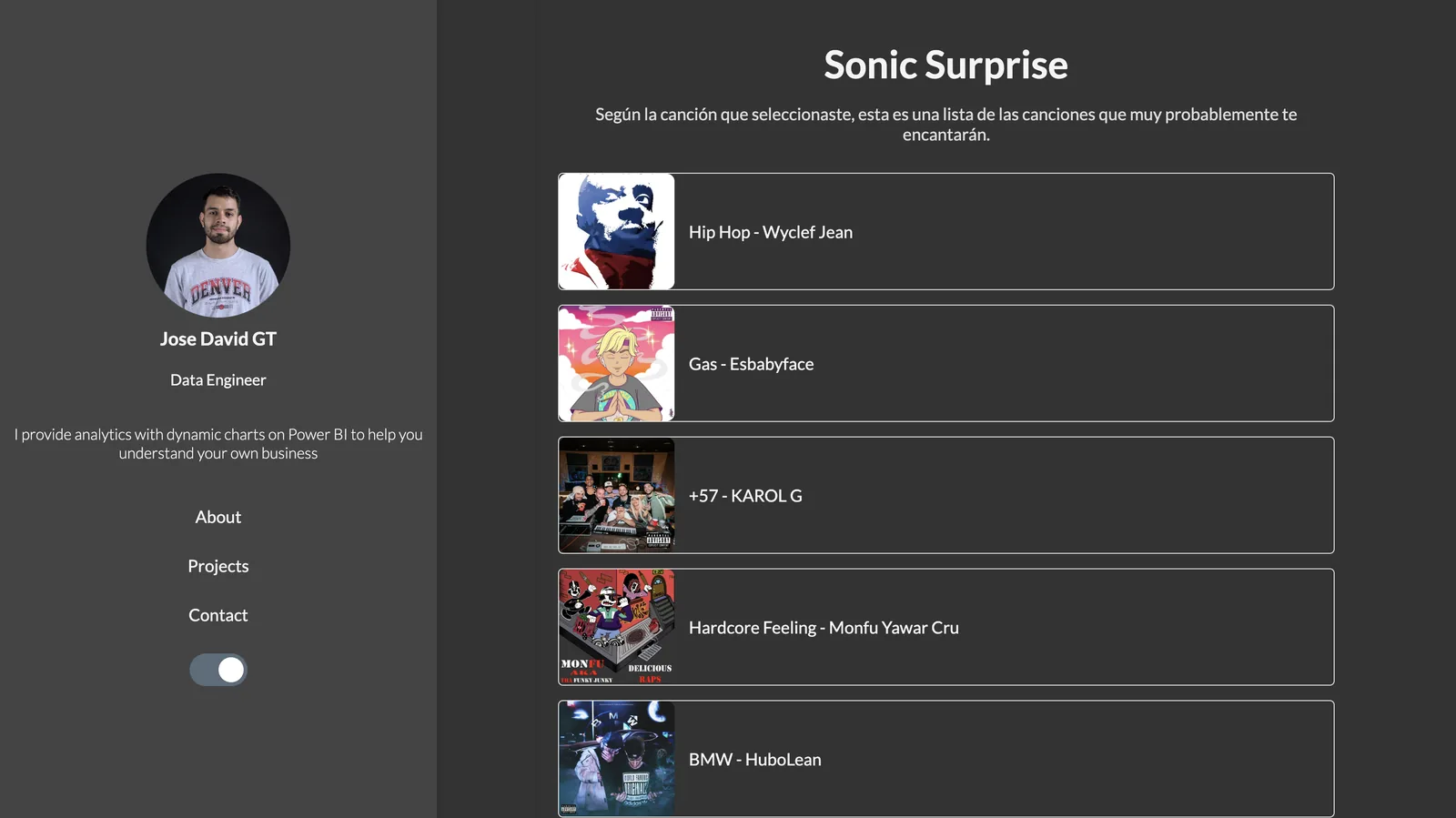
You type one song and one artist. GPT-4o proposes ten similar tracks; the app cleans the list (accents, punctuation, numbering) and looks each one up on Spotify to return real tracks with album art and a link.
Playlists Qualifier
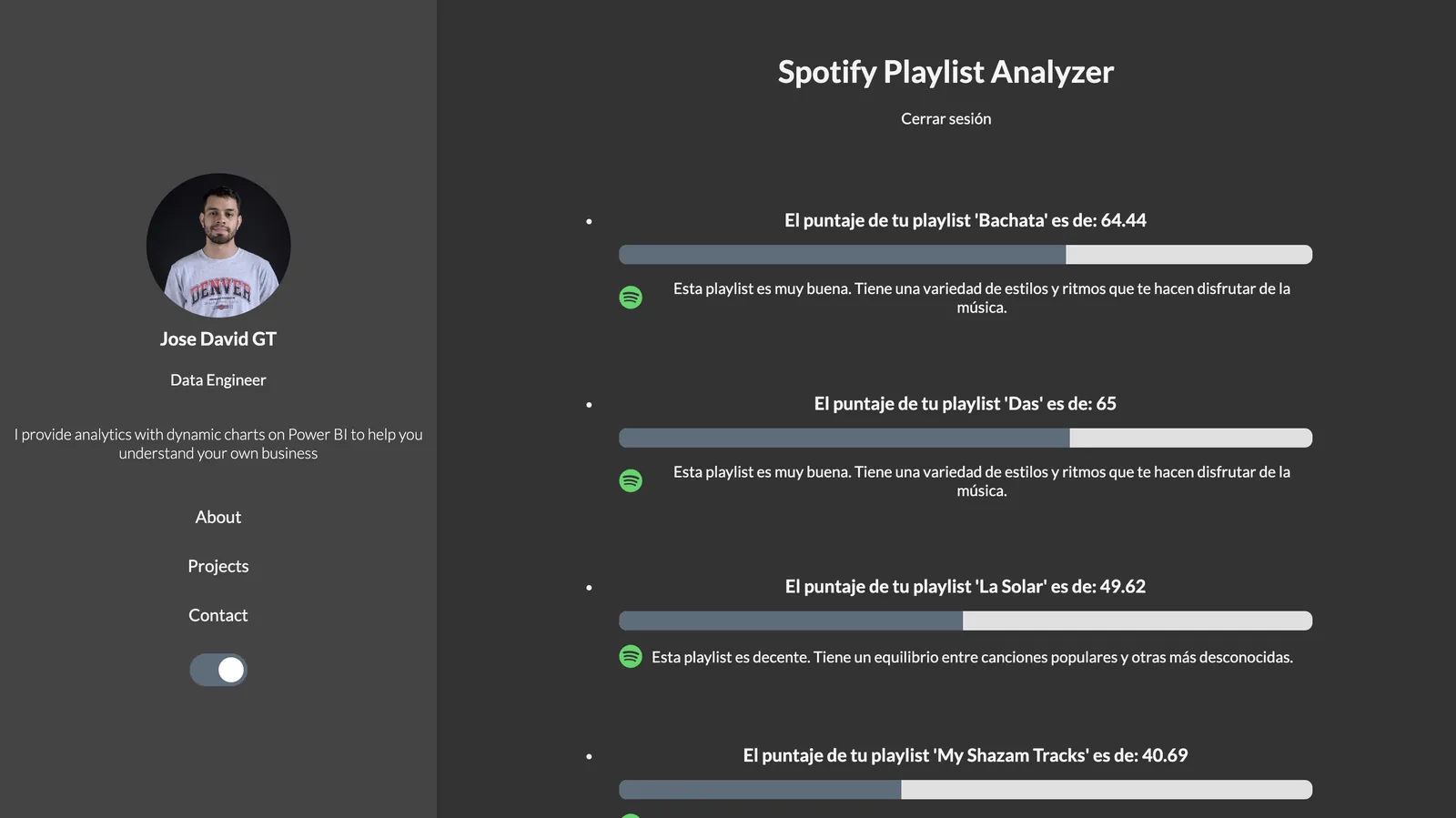
After logging in with Spotify, the app pulls every playlist of the user, every song in them, and averages the popularity score Spotify assigns to each track (0–100, driven by recent plays). Each playlist gets a score, a progress bar and a slightly cheeky comment. It uses pandas for the aggregation — over-engineered for the size of the data, but it was the point of the exercise.
When the provider changes the rules
Both apps originally required the user to log in with Spotify through OAuth. In 2025 Spotify restricted Web API access for apps in development mode to accounts with a Premium subscription, which silently broke both flows for visitors. Rebuilding them taught me three things I now apply by default:
-
Ask for the least access possible. Sonic Surprise only needs
/search, which works with the Client Credentials grant — no user login at all. The OAuth dance was never necessary. - Degrade gracefully. Each dependency is optional: without the AI key you get a sample list, without Spotify credentials each track links to a Spotify search, and Playlists Qualifier offers a sample analysis instead of a login button that cannot work. The page always renders; a visible note says what is in demo mode.
- Fail loudly in logs, quietly in the UI. Token and search errors are logged with context and turned into empty results, never into a 500.
def get_app_token():
    """Authorization header for Spotify, or None when not configured."""
    if not CLIENT_SECRET:
        return None
    creds = base64.b64encode(f"{CLIENT_ID}:{CLIENT_SECRET}".encode()).decode()
    resp = requests.post(TOKEN_URL, data={"grant_type": "client_credentials"},
                         headers={"Authorization": f"Basic {creds}"}, timeout=10)
    resp.raise_for_status()
    return {"Authorization": f"Bearer {resp.json()['access_token']}"}
Takeaways
Small projects are where API habits form. These two made me default to minimal scopes, explicit fallbacks and honest demo states — patterns that show up in everything I have built since.